
A closer view inside
Camera Chimney Inspectionin Southern California
Inspect accessible flue-interior details with a camera and explain what the images can and cannot establish.
Serving Ventura, Los Angeles and Orange counties · Scope, access and appointment times are arranged for each property.
Understand the concern
A useful camera image needs a location and an explanation.
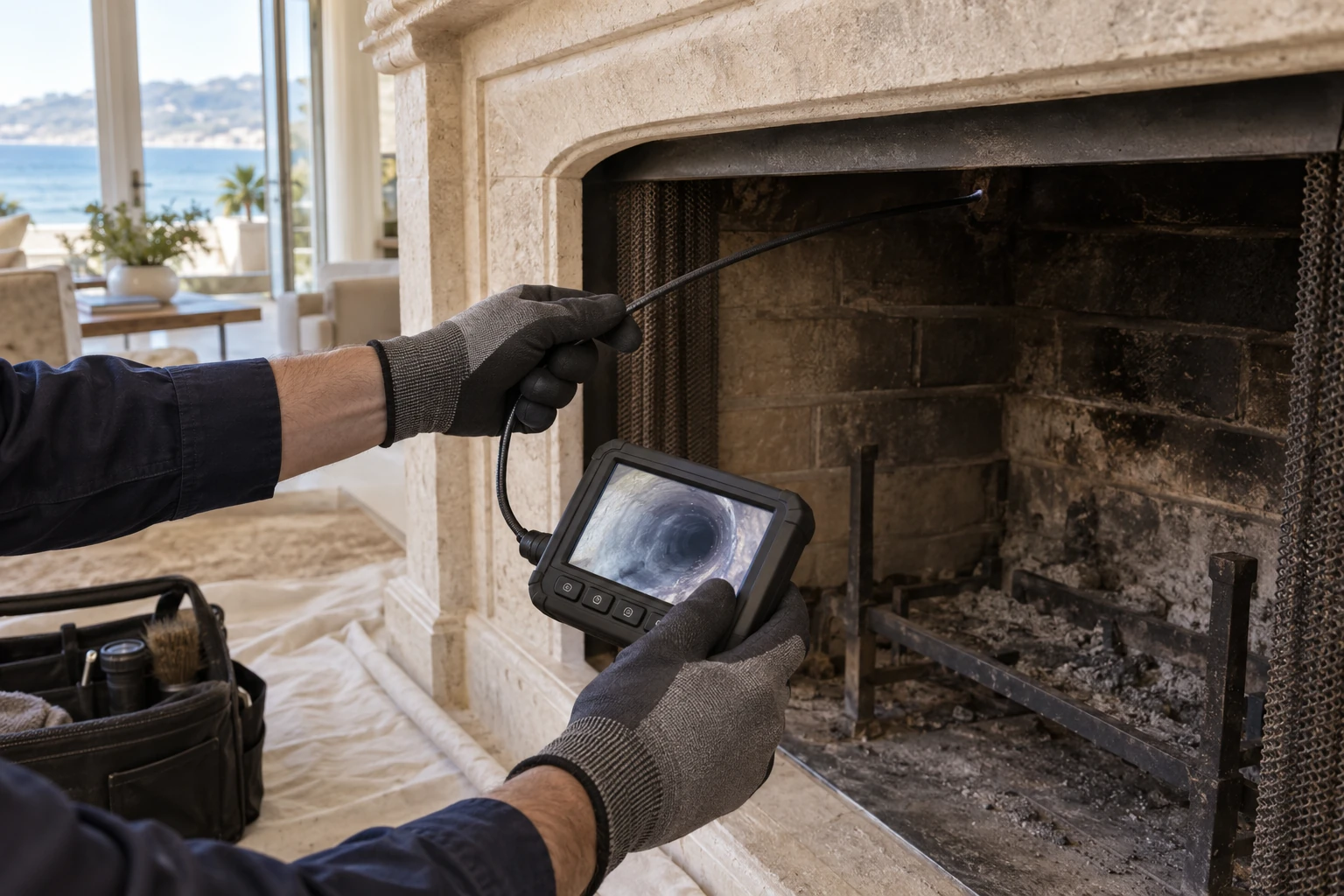
Internal imaging helps document portions of the flue that are difficult to see from either opening. Its value comes from identifying the flue, locating the finding and explaining what is visible. One close-up without context cannot establish the condition of the whole chimney.
Changes worth documenting
- A report mentioning a possible liner opening or joint defect that needs clearer documentation.
- A chimney fire or event that raises questions about interior damage.
- An unexplained obstruction or an appliance change requiring a closer review of the passage.
What the assessment should address
- Accessible liner surfaces and joints, visible irregularities, and any blockage or deposits limiting the view.
- Which sections were actually scanned and what cannot be established behind the liner or in concealed construction.
Before the conversation
- Provide previous footage or stills with the original report, rather than an isolated screenshot.
- Identify which fireplace or appliance the report concerns and note any access changes since it was prepared.
Planning the scope.
Camera review is useful when the flue interior cannot be understood from the fireplace opening alone. Prior reports and the reason for inspection help frame the review.
The assessment considers the visible interior condition and areas that remain inaccessible. Camera images do not establish every concealed clearance or construction detail.
Confirm the accessible areas, documentation and estimate before arranging camera inspection. Any further investigation or repair should be explained as a separate scope.
Common questions
Start with what you know.
Can deposits make a camera inspection less informative?
Yes. Deposits can obscure the surface that needs evaluation. Ask whether cleaning is needed to expose it and how findings will be documented before and after that step, particularly following a suspected chimney fire.
Does seeing a line on camera prove the liner has failed?
A line needs interpretation in context. Ask the report to identify its location, describe the observed condition and explain any remaining uncertainty or further assessment. Camera images support a finding; they should not be presented as an unexplained replacement verdict.
What should a camera-inspection scope describe?
Ask which flues and accessible areas will be viewed, how findings will be documented and what access limitations may remain.
Does a camera replace every part of an inspection?
No. It supports interior observation, while exterior, appliance and concealed-area questions may need other methods.