
Choose the right service
Inspection, basic sweeping or deep cleaning?
Understand the different purposes of an inspection, routine sweeping and deeper deposit removal before comparing a proposed scope.
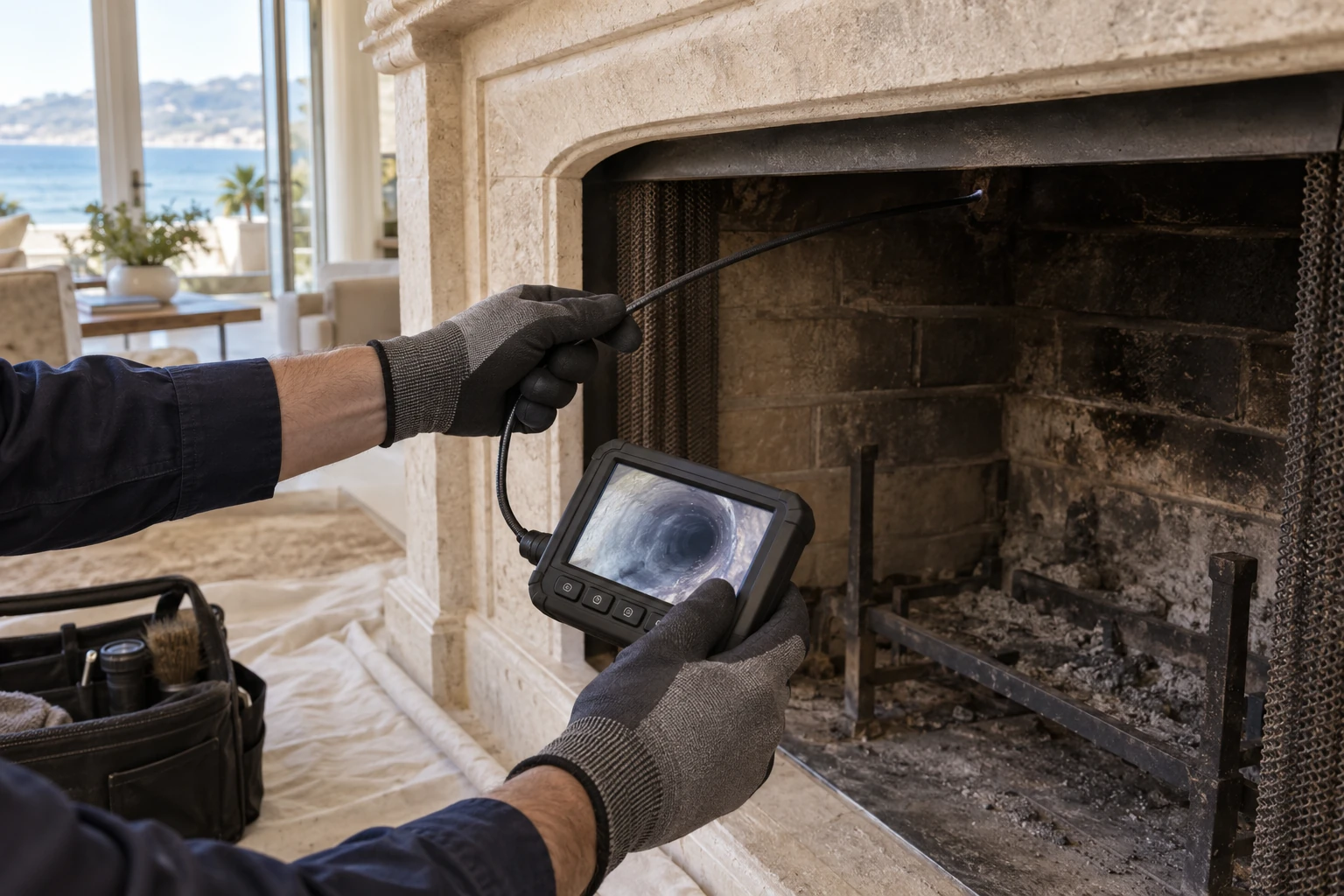
Inspection establishes the condition and the questions to resolve. Sweeping removes appropriate deposits. Deep cleaning addresses a different deposit-removal scope. Knowing the difference makes an estimate easier to assess.
Begin with the question you need answered
If the system condition is unclear, start with an inspection. If you have a prior report, a recent appliance change or a specific smoke, water or deposit concern, bring that context to the visit.
An inspection should explain observed conditions and access limits. It should not turn an unseen area into a claim that everything is safe.
Understand what each inspection method can show
A camera can help document accessible flue-interior conditions, while an exterior image or suitable drone assessment shows the chimney top and surrounding roofline. Neither tool establishes every concealed condition.
Ask which areas are included and how access limits will be recorded. Confirm any additional investigation and estimate before work is authorized.
Choose cleaning from the deposit condition
Basic sweeping is intended for deposits suitable for the routine cleaning process. Dense or glazed deposits can require a more involved professional approach. CSIA cautions that a chemical cleaning product does not replace inspection and mechanical cleaning.
Ask for the findings, proposed work, areas covered and estimate before authorizing inspection, cleaning or repair. No inspection offer or service price is published here.
- Ask what was observed and which areas were inaccessible.
- Confirm whether the recommendation is basic sweeping, deep cleaning or repair.
- Keep the inspection explanation and proposed scope together.
Keep inspection levels separate
Level 1, 2 and 3 describe inspection scopes, not cleaning packages. The historical CSIA explanation distinguishes progressively wider inspection scopes; confirm the current scope with a qualified professional. The appropriate scope should follow the actual reason for assessment.
USFA recommends professional chimney and heating-equipment inspection and cleaning each year. That maintenance baseline does not determine a repair scope or authorize extra work.
Common questions
Clear answers for the season.
Is deep cleaning automatically part of an inspection?
No. Inspection evaluates the system, while cleaning removes deposits. Ask for a separate explanation of any proposed cleaning work.
Does a camera show every hidden condition?
No. Images show accessible interior details; concealed construction, clearances and areas beyond access remain separate questions.
Can I ask for a written explanation before approving work?
Yes. Ask which findings support the recommendation, what the scope includes and how inaccessible areas or additional work will be handled.
Official sources
Check the current authority.
Weather, air-quality restrictions, permits, and appliance guidance can change. These are the sources used to keep this guide grounded.
CSIA homeowner resources
Annual inspection, sweeping, damper and creosote guidance; an educational source, not a claim of Royalstone certification.
Open source ↗OFFICIAL RESOURCECSIA inspection levels
Historical CSIA explanation of inspection levels; not a current code text or a claim of Royalstone certification.
Open source ↗OFFICIAL RESOURCEUSFA heating fire safety
Annual professional chimney care and fireplace clearance guidance.
Open source ↗