
Protection at the top
Chimney Cap Installation & Replacementin Southern California
Match cap dimensions, material and attachment to the chimney and flue that are actually present.
Serving Ventura, Los Angeles and Orange counties · Scope, access and appointment times are arranged for each property.
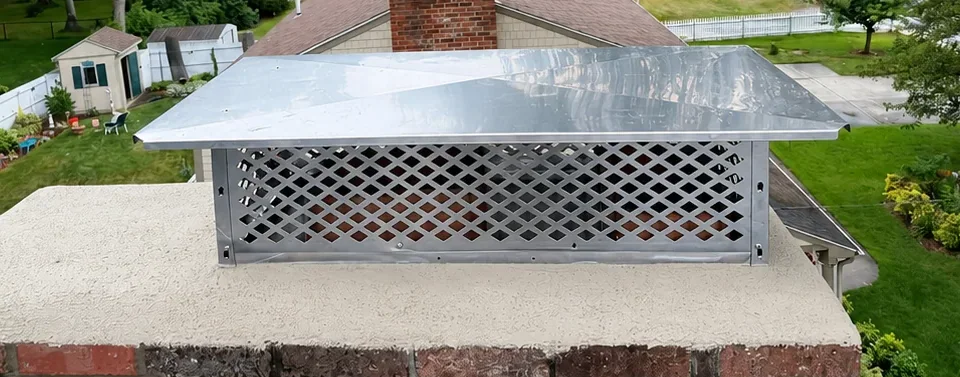
Understand the concern
Choose a cap for the flue arrangement, not the roof photograph.
A cap decision starts with the chimney type and the outlets it serves. A masonry chimney with several flues and a factory-built metal chimney can need different top assemblies. Rain protection, an unobstructed outlet, suitable attachment and future maintenance access all belong in the discussion.
Changes worth documenting
- A missing or tilted cover visible from the ground.
- Rust, a bent screen or debris around the top assembly in existing photographs.
- Rain or animal entry that needs investigation rather than an assumed cap-only solution.
What the assessment should address
- The number and arrangement of outlets, verified dimensions and condition of the mounting area.
- Compatibility with the chimney system and whether the assembly can be maintained without damaging adjoining parts.
Before the conversation
- Share ground-level views of the whole stack and any previous cap or chimney paperwork.
- Mention nearby trees, coastal exposure and earlier cap replacements. Measurements at roof level should be obtained through appropriate access.
Real photographs · Before & after
See the detail.
See the difference.
Explore photographic records from the owner’s project archive. Move each divider to see the individual views.
Owner’s project archive · PeakStone
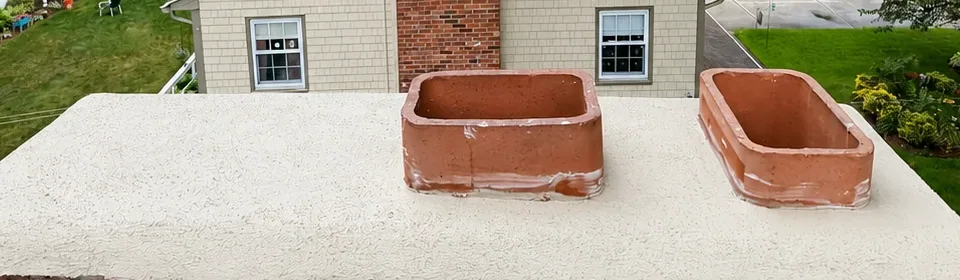
Same chimney top; camera position and framing vary.
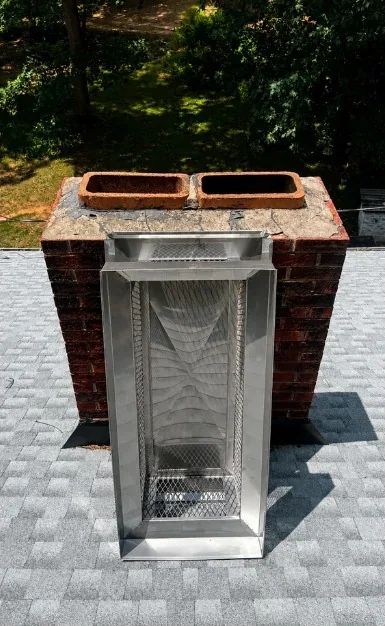
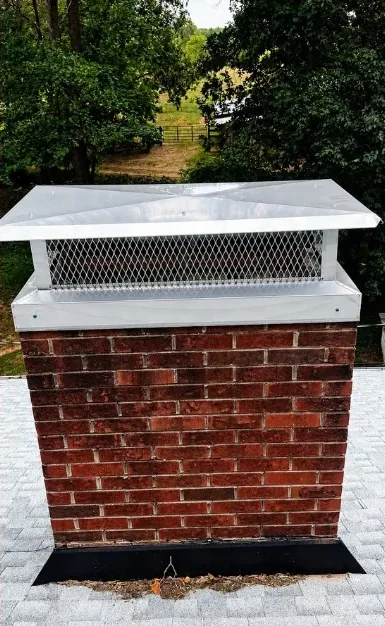
Similar front views; camera position and framing vary.
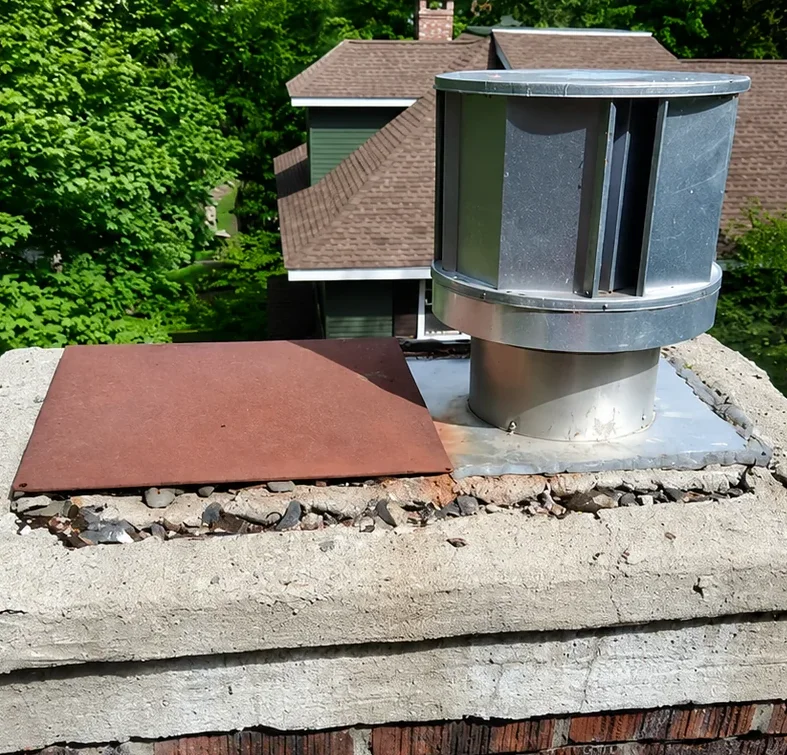
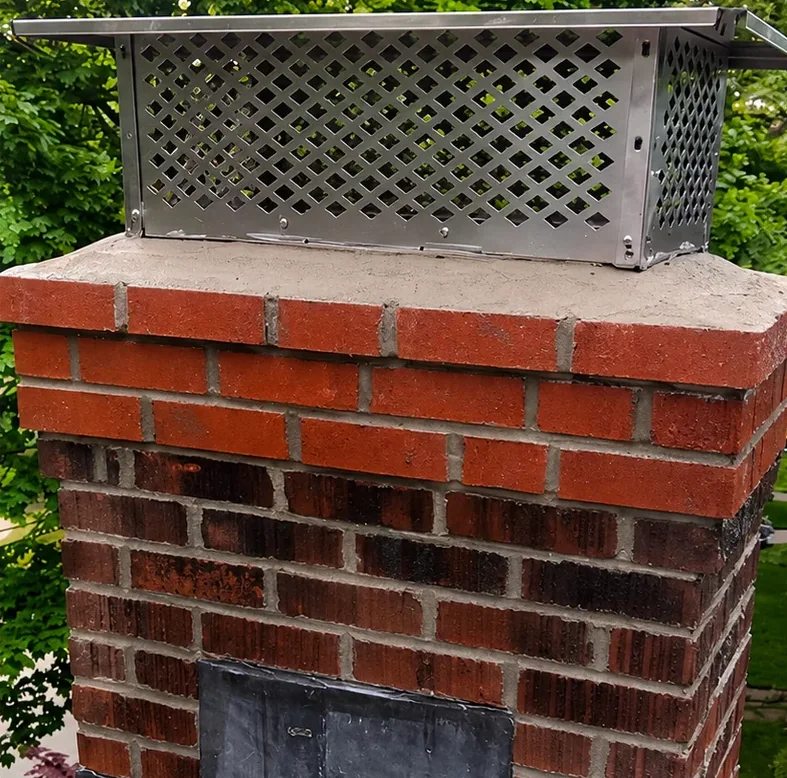
Same chimney top, photographed from different positions.
Planning the scope.
A cap helps address the chimney opening, but the correct fit depends on flue layout, dimensions and the existing top assembly.
Coastal exposure and the condition of metal components are useful discussion points. An inspection distinguishes material wear from a fit or attachment concern.
Installation or replacement is quoted after the configuration and access are understood. A cap cannot correct every draft, water or masonry problem on its own.
Common questions
Start with what you know.
Is a chimney cap the same as a chase cover?
No. A cap protects the flue outlet; a chase cover spans the top of a framed chimney enclosure. A masonry crown is another distinct component. Identify which part is damaged before comparing replacement descriptions.
Does a larger cap always give better protection?
No. Size alone does not establish a suitable fit. Ask how the proposed cap accommodates the outlet arrangement, required venting and attachment, and whether the chimney manufacturer specifies a particular termination.
Can I order a cap from a photograph?
A photograph is useful context; measurements, flue arrangement and suitable attachment still need verification.
Should I climb up to check a loose cap?
No. Keep clear of anything that could fall and share a safe ground-level photo instead.