
Wood · gas · masonry
What kind of chimney work does your home actually need?
A wood fireplace, gas appliance and masonry chimney can share a roofline but require different inspection, cleaning and repair decisions.
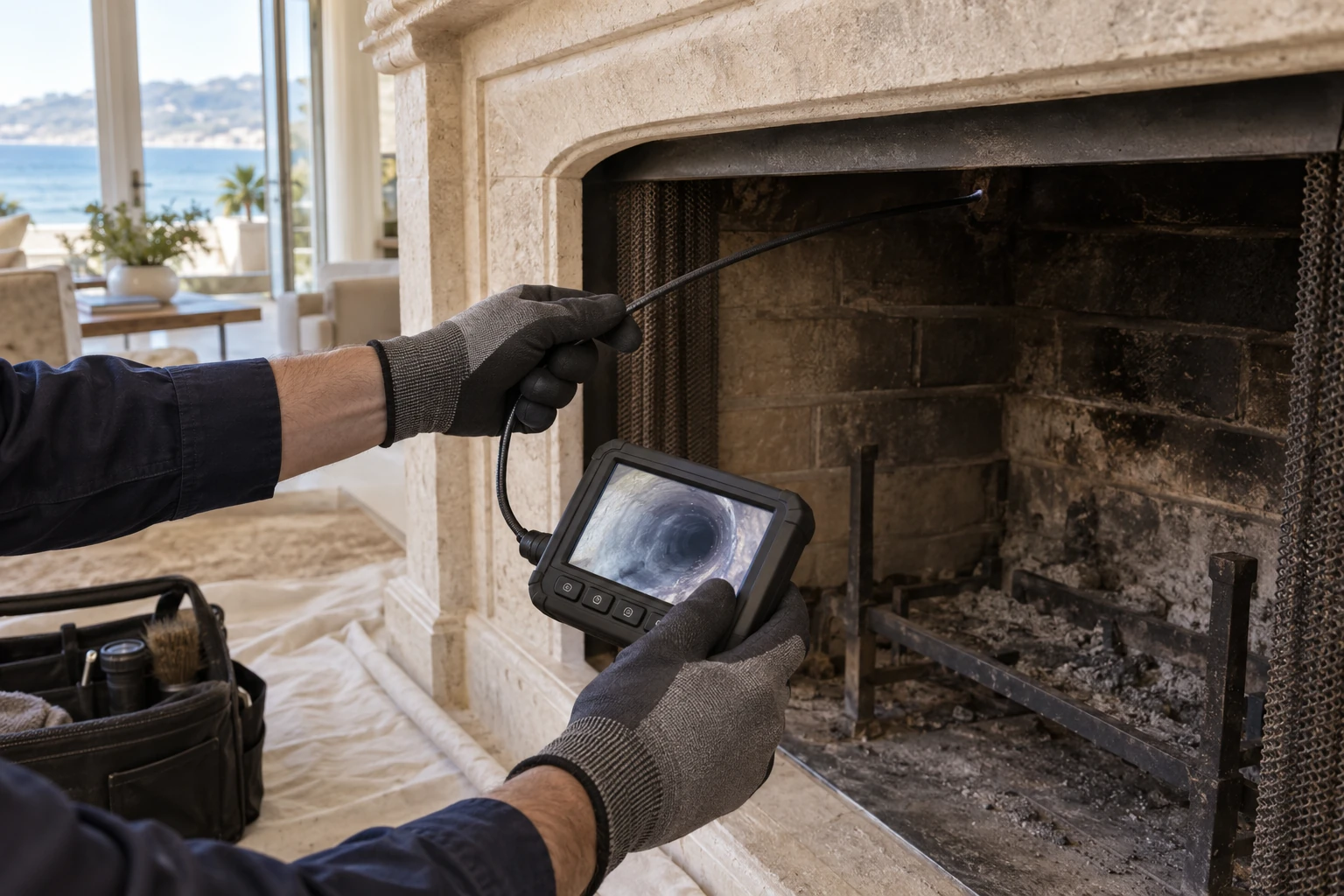
“Chimney service” can mean several very different jobs. Before asking for a sweep or a rebuild, identify the appliance, what vents it, the symptom you noticed and which part appears affected. Those four details make a proposed scope easier to understand.
Start with the appliance and fuel
A wood-burning masonry fireplace, wood stove, gas logs in a masonry fireplace and a manufactured direct-vent gas unit are not interchangeable. Photograph the appliance label or keep its model number and installation records if available. Do not assume the same damper, liner or cleaning method fits each system.
The U.S. Fire Administration recommends professional annual cleaning and inspection of heating equipment and chimneys. The Chimney Safety Institute of America also explains why gas venting needs attention even when it does not produce wood creosote: obstructions and venting defects are different concerns.
- Identify wood, gas logs, insert, stove or manufactured gas fireplace.
- Note the last known inspection, sweeping or appliance change.
- Describe smoke, odor, water or visible damage without guessing the cause.
For wood: separate deposits from structural condition
A sweep removes appropriate soot and creosote deposits. It does not repair a cracked crown, loose mortar, damaged liner or water entry. Conversely, a roofline repair does not remove deposits inside the flue. Ask which conditions were actually observed and whether the estimate includes inspection, sweeping, repair or more than one of these.
The EPA’s archived Burn Wise guidance recommends dry, seasoned wood and explains how moisture and poor burning habits increase smoke. Its program is no longer updated, so use current local air-quality notices for today’s burn restrictions.
For gas: verify the appliance and its vent path
A gas fireplace problem may involve the appliance, controls, logs, combustion air, vent termination or a chimney serving gas equipment. The manufacturer’s instructions and the exact model matter. Do not bypass a safety control or improvise a gas adjustment.
A direct-vent manufactured unit and gas logs installed in an existing masonry fireplace have different venting arrangements. The U.S. Department of Energy explains the distinction between natural-draft and sealed direct-vent systems. Ask which system you have before accepting a generic “chimney cleaning” recommendation.
For masonry or construction: define the part and the permit question
Repointing mortar joints, replacing individual bricks, rebuilding a chimney top and constructing a new chimney are different scopes. A crown, flashing and liner each solve different problems. Ask for the location and extent of damage, proposed materials, access plan and whether the local authority needs to review alteration work.
Older brick or stone deserves special care: the National Park Service explains that replacement mortar should be compatible with the existing masonry. A hard mortar or coating chosen only for appearance can make the wrong repair. This is a material-selection principle, not a diagnosis of any particular home.
- Request photos or a written description of the affected component.
- Separate cleaning, appliance work, masonry repair and construction in the estimate.
- Check the city or county permit office for the actual alteration scope.
Common questions
Clear answers for the season.
Does a gas fireplace need the same sweeping as a wood fireplace?
Not necessarily. Gas and wood systems produce different deposits and have different appliance and venting requirements. Identify the model and ask what condition warrants the proposed work.
Can a chimney cap stop every leak?
No. A cap covers an opening, while water can also enter at flashing, the crown, masonry or another roof interface. The repair should follow the observed entry path.
Is repointing the same as rebuilding?
No. Repointing renews mortar joints. Rebuilding replaces a larger portion of masonry. The condition and stability of the existing work determine the appropriate scope.
Official sources
Check the current authority.
Weather, air-quality restrictions, permits, and appliance guidance can change. These are the sources used to keep this guide grounded.
USFA heating fire safety
Professional annual inspection and cleaning guidance.
Open source ↗OFFICIAL RESOURCEDOE fireplace ventilation
Combustion-air and venting concepts for different appliance types.
Open source ↗OFFICIAL RESOURCENPS masonry repointing brief
Compatible mortar principles for older masonry.
Open source ↗